To track or not to track? Weight loss approaches
When pursuing weight loss, two distinct approaches emerge: tracking, involving monitoring bodyweight and food intake, and not tracking. Let’s delve into both methods and their pros and cons.
THE NON-TRACKING APPROACH
This weight-loss path doesn’t require meticulous tracking, no measuring portions and for some, not even a weekly weigh-in. Many people thrive on a more intuitive style of eating, whether for mental health reasons or simply because they find it less hassle.
However, not tracking can be challenging: it’s easy to unknowingly overeat and stall your progress, or under-eat and risk metabolic slowdowns and eventual overeating due to excessive hunger.
If you feel tracking isn’t right for you at this stage, honour that instinct; mental well-being is a vital part of any sustainable health journey. Keep in mind, though, that without personalised guidelines, intuitive methods can be trickier to navigate.
Ask yourself regularly:
Am I feeling energised and nourished?
Do I often feel dizzy, fatigued, or ravenous?
Are my clothes feeling looser or tighter over time?
If you do resistance training, is your strength being negatively affected?
If you rarely feel hungry before meals or notice no changes in how your clothes fit over time, it may signal that you’re not in a calorie deficit, or at least not a consistent one. Paying close attention to your energy levels, hunger cues, and overall well-being becomes essential when you’re not tracking.
You’ll also need to practise conscious consumption, learning to tell the difference between true hunger and emotional eating (which is a skill that can be developed).
With practice, you may find a natural rhythm that works for you, just keep in mind that this approaches challenges can make consistent progress harder to achieve. That’s why we generally recommend a tracking-based approach for most people, at least initially.
Want us to create a personalised plan for you that removes all of the guesswork? Find out more here.
THE TRACKING APPROACH
As I alluded to earlier, I generally prefer tracking. It’s a more data-driven method that can yield more reliable, consistent results by helping you monitor exactly what you’re eating and how much. Armed with this information, you can adjust your diet more strategically.
TWO WAYS TO TRACK CALORIES
1. Manual tallying
When it comes to tracking calories, you could do one of two things. Firstly, you can start by simply adding up the calories in each item you consume throughout the day. You may also want to add up the protein you consume (especially if you have strength or physique aspirations). We should aim to eat a large amount of whole, single-ingredient foods, meaning that, more often than not, you’d have to look up their calories.
2. Using an app
Another approach would be to use an app to track what you consume; we like “Cronometer”. Beyond tracking calories and macronutrients (protein, carbs and fats), Cronometer also highlights your fatty acid, vitamin and mineral intake; something many people overlook.
CONCLUSION
The way that you go about your fat loss journey is personal to you and has to work for your brain, energy and lifestyle. For plenty more tips and advice, check out our new cookbook…
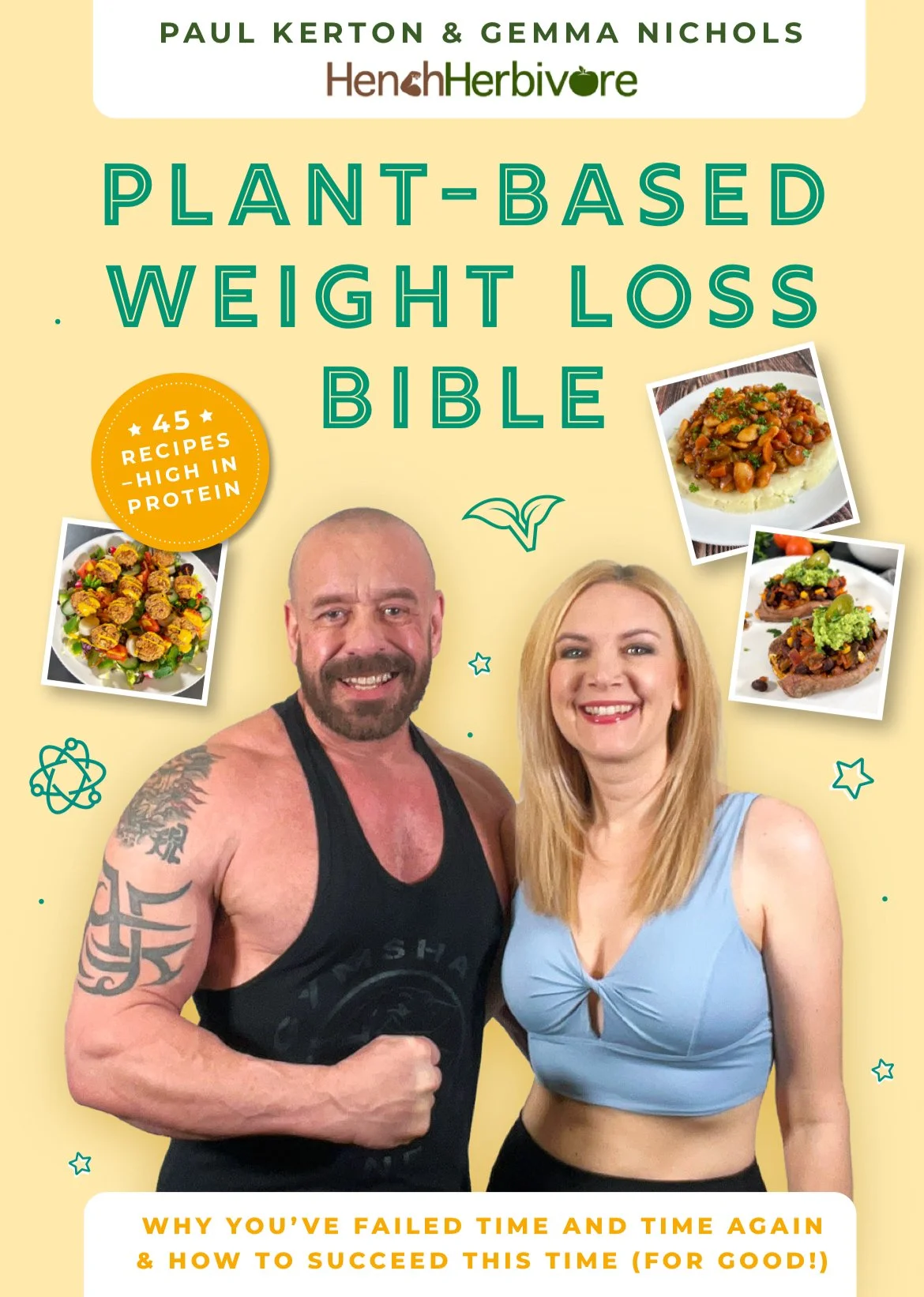
The Plant-Based Weight Loss Bible brings together decades of combined experience and knowledge, covering every key element needed not only to optimise your weight loss, but to maintain results long term.
This is a practical, evidence-based guide to losing fat in a way that’s realistic, nourishing, and sustainable. It covers:
The science of how weight loss actually works
The psychological and emotional factors that can derail progress
The book also includes 45 delicious, completely guilt-free, oil-free, high-protein, whole-food, plant-based recipes, designed to help you feel full, satisfied, and supported.
We also offer 1:1 online coaching services and we would LOVE to work with you! If you’re serious about taking control of your health and fitness, please get in touch and book a free call now.
Warmly,
Paul & Gemma
Hench Herbivore
